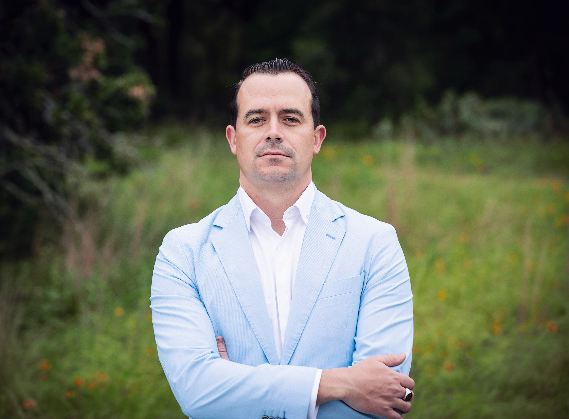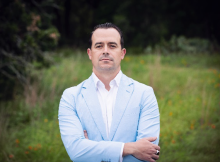
After serving 21 years as a cyber warfare operator in the U.S. Air Force, I am now CEO of STAG, a rapidly growing cybersecurity and artificial intelligence firm with offices in six regions around the world. Today, I have the privilege of protecting critical infrastructure like the U.S. election system and Texas power grid, advising decision makers at the Congressional and Senatorial levels, and transforming complex cybersecurity frameworks into AI applications that everyday users can access. I currently live in the Texas hill country with my wife and two daughters.
What's a challenge you've faced in your career or life that your BT experience helped you navigate?
Brownell instilled a philosophy of lifelong learning. Later in life as a cyber mission commander in the military, the targets we would go after each night would be very different so mental agility was key. We would assess a target, cracking its network through the understanding of its centers of gravity, and eventually finding its “why.” I was able to build centrality models of adversary networks through algorithms I learned at BT (even though Carrie Rise might question how much I learned in class and how much I had to catch up on later in life). The foundation of looking at a problem set and not being afraid to learn not just one but many things completely outside of your comfort zone is a priceless skill. It transitions any form of profession from running a bakery to a Fortune 500 company. Never stop learning.
Is there a BT memory or moment that still makes you smile?
In 2001, the vendors raised the price of soda and snacks in the vending machines in the Commons. In response I started stocking my locker with soda and snacks and offering them at discounted prices, undercutting their markup by 20% but maintaining the vendor 42% upcharge. Soon I had more soda and snacks in my locker than academic books and found my love of entrepreneurship.
The Head of Upper School pulled me into the office inquiring of my version of “Hy-Vee at BT.” I explained the rise in prices and that the students preferred my options. I was informed I was not allowed to undercut the vendors. I responded with “This is very contradictory to what I was just taught in third period about the success of free market economy.” That comment got me three weeks' detention.
What’s something you wish you’d known as a BT student that you know now?
I wish I would have read the poem “If” by Rudyard Kipling, at an earlier age.
“Time is the currency of the universe. Invest it wisely. If spent poorly, at least have a good story behind it. If spent wisely, remember to pay it forward.”
If you could have dinner with any BT alumni from any era, who would it be and why?
Brett Beavers, ’82, Mike Skinner, ’82, David Peebler, ’80, Tom Skutt, ’80, Joe Christ, ’82, John Sunderland, ’85, - just to know if the stories are true!
What’s a cause or issue you’re passionate about, and how did you get involved?
My wife and I support many veteran and wounded warrior programs through equine therapy. She and our daughters are avid riders and horse enthusiasts. The foundations we support provide our nation’s warriors a special form of therapy that has shown so much benefit to those who are working through PTSD, traumatic brain injury, and many other issues.